
Finding Ross Township Residents Carefully
Ross Township resident records are split by custodian. A current property question begins with the county’s address and parcel systems. A past household question may start at Northland Public Library. A court, marriage, or estate question belongs with the Allegheny County Department of Court Records. Each source proves a narrow point, and that distinction prevents a name match from becoming a claim about a household.
Use the record that fits the fact already known. An address can lead to a parcel and owner result. A dated directory entry can place a household at an address during one period. A deed links parties to a land transfer, while an individual voter-status check has a different purpose. Renters, unlisted household members, utility customers, and protected addresses are not a public master roll.
- Start with the county property search when you have a Ross street address or parcel number.
- Record the parcel identifier, address spelling, municipality, and the source date before comparing results.
- Use the Division of Real Estate for a recorded instrument or copy request tied to that parcel.
- For a past household, compare a dated directory or phone book with maps and census material.
- Ask the actual custodian for a specific existing record when the online trail ends.
Ross Township Resident Record Keepers
Ross Township handles municipal permits, local address questions, police-record channels, and its own Right-to-Know process. Allegheny County keeps the property, GIS, land-recording, court, and election routes that do most of the work in a Ross residents directory search. The Commonwealth holds vital-record, voter-status, licensing, and statewide court paths. Start with the office that created the record, because a county map, a township permit, and a state index have different scope.
Allegheny Division of Real Estate
County Office Building, Room 101
542 Forbes Avenue, Pittsburgh, PA 15219
412-350-4636, option 2
Allegheny Property Assessments
County property-record service
436 Grant Street, Pittsburgh, PA 15219
412-350-4636, option 2
Allegheny Elections Division
County Office Building, Room 312
542 Forbes Avenue, Pittsburgh, PA 15219
412-350-4500
Address-by-address research is developed in the Ross Township street directory; use it when the question is about the records tied to one road rather than one person.
Ross Township Address-First Property Search
The free Allegheny County Real Estate Portal is intentionally address or parcel based. In address mode it accepts a house number, a street name without a suffix, and an optional municipality. Choose Ross Township where that helps separate a common street name. The result list shows Parcel ID, Owner Name, Address, and Municipality. It is a strong starting record because it ties the street location to a county parcel identifier.
Owner-name searching, legal-description retrieval, and added tax information are subscription features, not fields on the free screen. That is why a person-first search often needs a known official address, a county subscription when warranted, or a counter and copy request. The free result is still useful, but it does not establish every current occupant or every address associated with an owner.
| Portal field | Input | Use in Ross research |
|---|---|---|
| House Number | Text, optional | Refines an address when known. |
| Street Name | Text, required in address mode | Enter without Street, Drive, or another suffix. |
| Municipality | Optional dropdown | Select Ross Township to narrow a common street. |
| Parcel Number | Separate search mode | Returns to a county parcel once the identifier is known. |
Note: A property result links an owner string to a parcel, not every person who may live at that address.
The address-and-parcel search screen is shown below. Its two modes explain why a complete Ross Township residents directory workflow normally begins with a location.
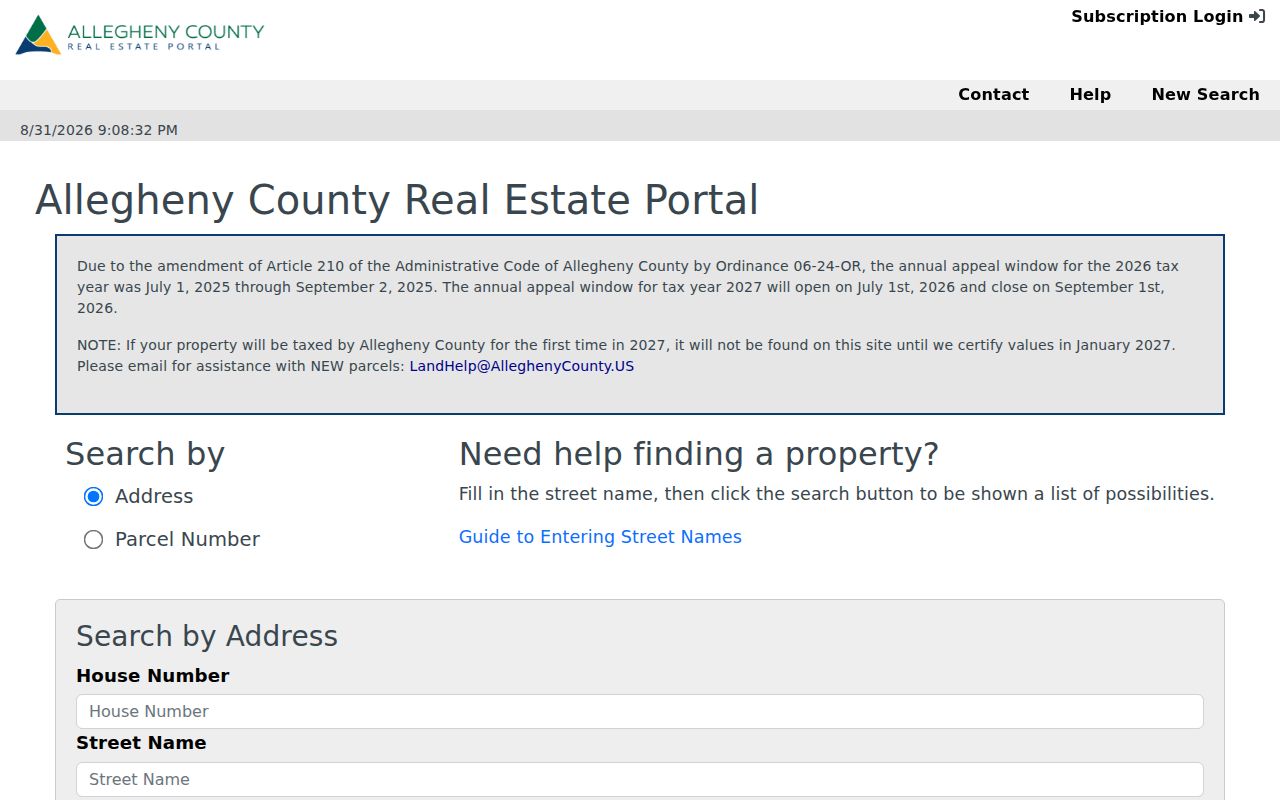
Use the returned parcel identifier as the handoff to GIS, deeds, and related county sources.
Ross Township Parcel and Deed Trails
A parcel is the county’s geographic unit for a piece of land. The parcel result anchors the next steps, but it is not title work. The Allegheny GIS Viewer can place the address and display the parcel in map context. The Division of Real Estate then supplies the recorded-document channel for deeds, mortgages, satisfactions, powers of attorney, and plans.
For a backward land trail, use the current acquisition deed to identify grantor, grantee, and legal description. Find the earlier transfer in which the grantor acquired that same legal description, then repeat. Subdivision plans, lot consolidations, estates, trusts, corrections, and quitclaims can break an apparent street-address chain. Older material may require a county counter, copy channel, or index-book check because ongoing backscanning does not mean every historic image is online.
- Parcel ID
- A county identifier that connects a mapped property to the assessment system.
- Situs address
- The physical property address shown for the parcel; it can differ from a tax-bill mailing address.
- Legal description
- The lot, block, plan, or other land description used to match a deed to the right property.
- Grantor and grantee
- The transferor and transferee named in a recorded instrument.
Ross Township Voter Record Boundaries
Pennsylvania separates a person checking their own status from a request for public voter-list products. The official Check My Registration Status route is for individual confirmation, with Allegheny County and 1-877-VOTESPA as documented fallbacks. It is not a public name-and-street browser. A mismatch can reflect an old name or address and should be resolved through the election custodian.
The Department of State has a written-request route for a Public Information List, Street List, Walking List, or Full Voter Export. Those products have defined fields and a required lawful-use certification under Pennsylvania election law and regulations. In particular, a record of the elections in which someone voted is not a record of how that person voted. Protected records and address-confidentiality rules still apply.
The Commonwealth voter-status entry page is pictured here. It supports the individual status route rather than a Township-wide directory.
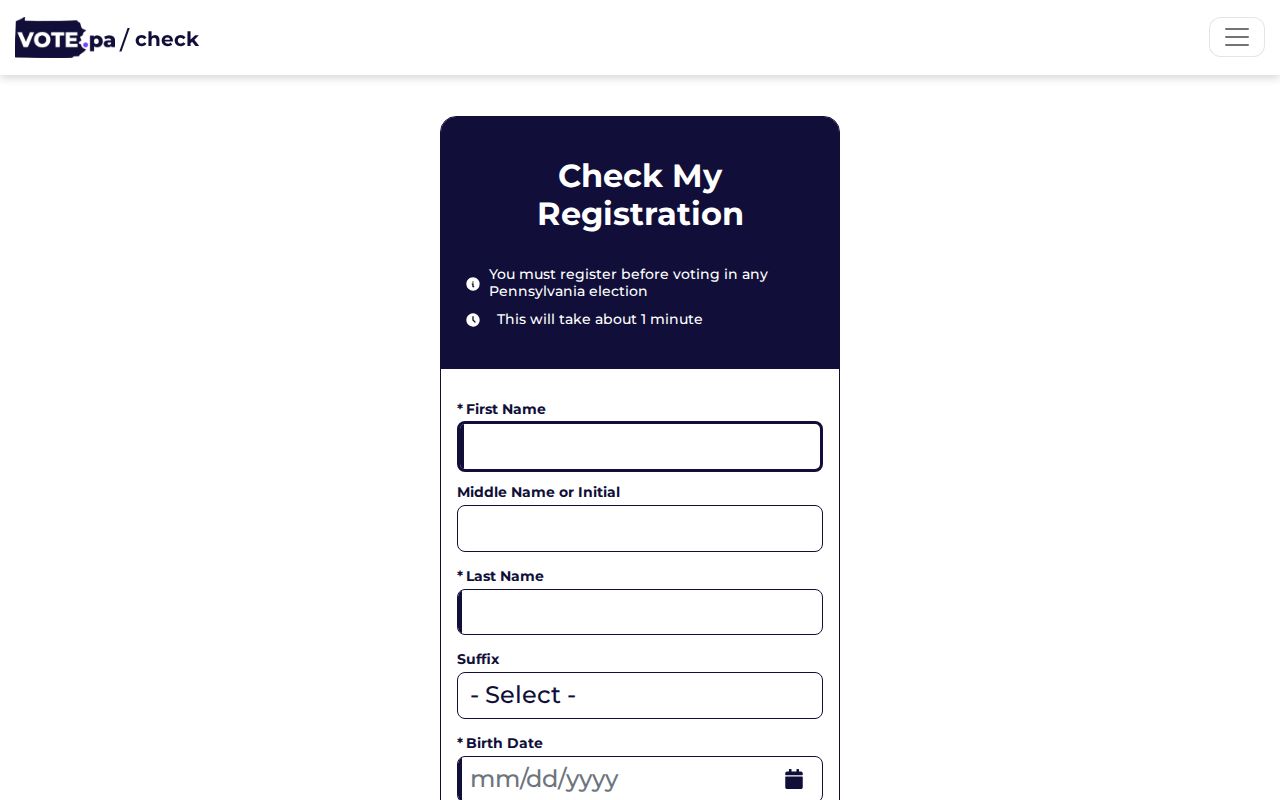
For a voter-data request, select Allegheny County on the official request materials rather than treating Ross Township as a county.
Current Ross Township Resident Sources
Current sources in a residents directory do not all answer the same question. Property and deed records show property relationships. A voter channel has election-law limits. Court and vital systems document specific events or proceedings, often with access gates. Northland’s materials supply historical context rather than a live household list. Compare records that describe the same period and relationship, then retain the source date and office name with the result.
| Ross source | What it can confirm | Custodian | Access route |
|---|---|---|---|
| Real Estate Portal | Owner string, parcel, situs address | Allegheny Property Assessments | Free address or parcel search |
| Land Records | Recorded transfer parties and legal description | Division of Real Estate | Public search, online, mail, or counter copies |
| Voter status or list product | Status or defined election data | Pennsylvania and Allegheny Elections | Individual route or certified request |
| Permit record | Project, address, parcel, owner or applicant fields | Ross Community Development | iWorQ or a focused record request |
| Local history collections | Dated directory, map, and document clues | Northland Public Library | Online and in-library research |
A name that needs independent corroboration belongs in the Ross Township resident lookup workflow, which keeps the focus on one person and compatible record dates.
Ross Township Court and Vital Paths
The Allegheny County Department of Court Records combines Civil/Family, Criminal, and Wills/Orphans functions. County Civil/Family and Wills/Orphans search access is account-gated, while the Pennsylvania UJS Case Search is the statewide public route for criminal and magisterial-district dockets. A case result is a docket trail, not proof that two same-named people are the same person.
For an estate question, the Wills/Orphans division has a mail will-search form. Its documented $10 nonrefundable search includes a copy if a will is found and requires the decedent’s name and date of death. Pennsylvania birth and death records follow different rules: genealogy access periods are 105 years for births and 50 years for deaths, and certified copies remain controlled through Vital Records.
The county Civil/Family search entry screen makes the account gate visible. Use a case identifier and the responsible clerk when a record needs confirmation.
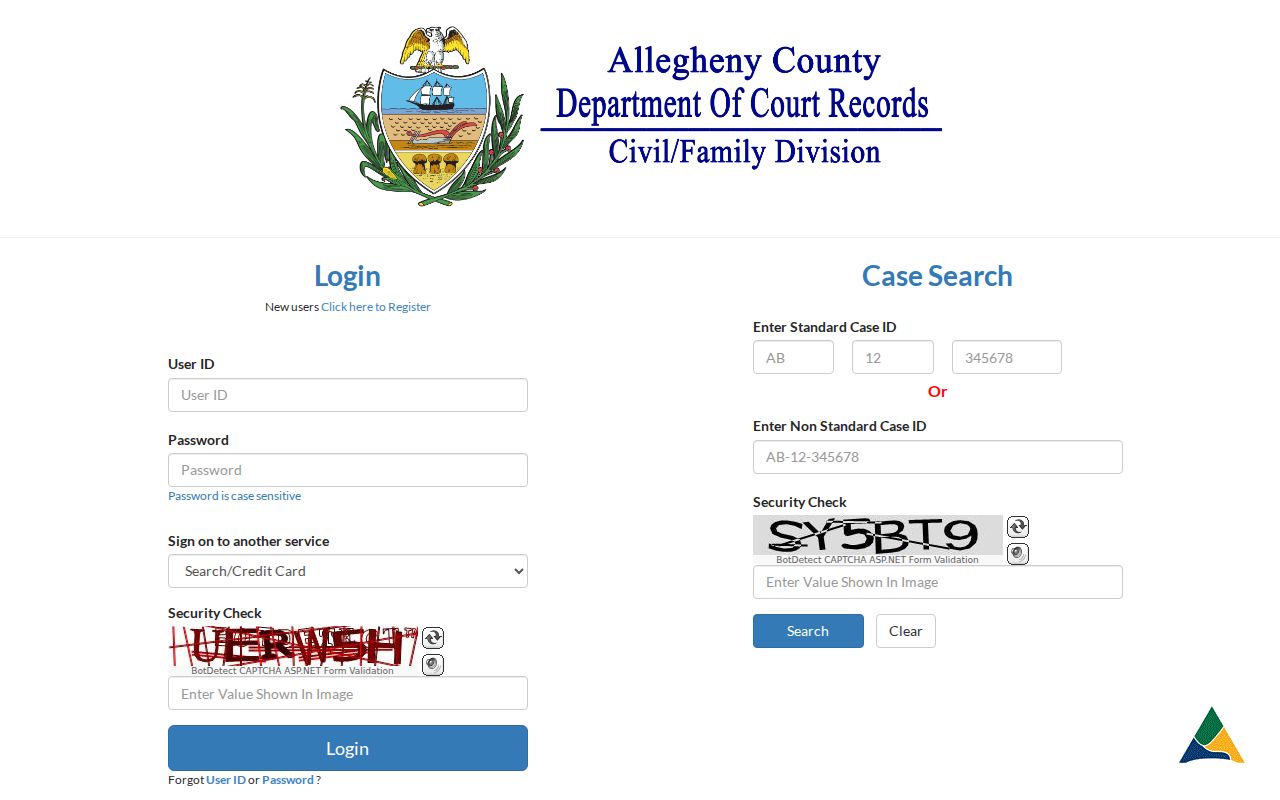
Vital-record requests follow the Commonwealth’s eligibility and custody rules, not the court-search interface.
The Pennsylvania birth-certificate information page illustrates the separate state channel for a controlled vital record.
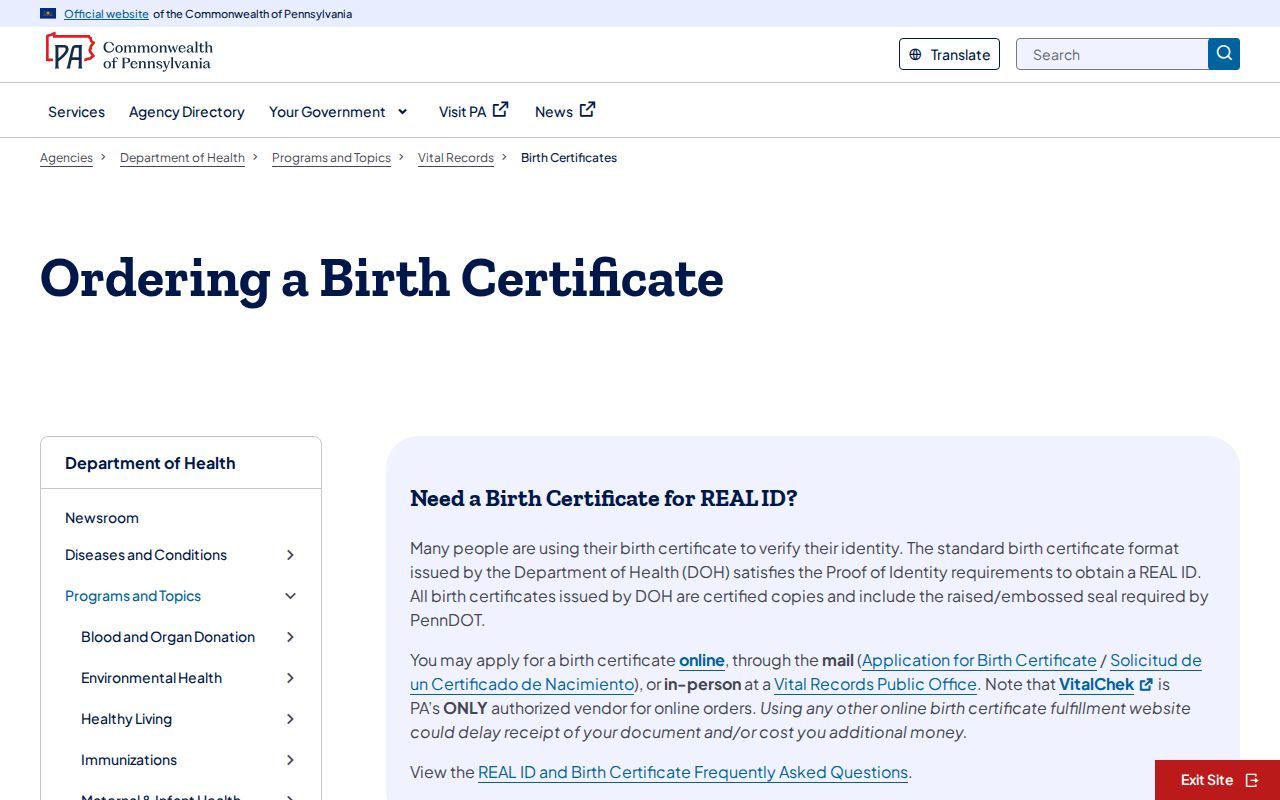
For historical research, use the public genealogy windows or State Archives path rather than assuming a certified record is publicly available.
Ross Township Permit and Archive Records
Ross Community Development adds a municipal, address-keyed layer to the residents directory trail. The Township uses iWorQ for permit submissions and publishes current building-permit, zoning, and pre-August 20, 2020 permit search routes. The verified screens use fields such as permit number, permit date, parcel address, or applicant name. A permit can help date construction, alteration, demolition, or an occupancy event, but it is not proof that an applicant or contractor lived there.
The Township Archive Center is a different source. Its keyword, archive, time-period, and date-range controls help find older municipal documents, including budget, pension, and capital-improvement records. It is useful for dating a road, project, or policy, not for searching residents by name.
The Ross permit resources page shows the municipal route to iWorQ and the Township’s permit forms.
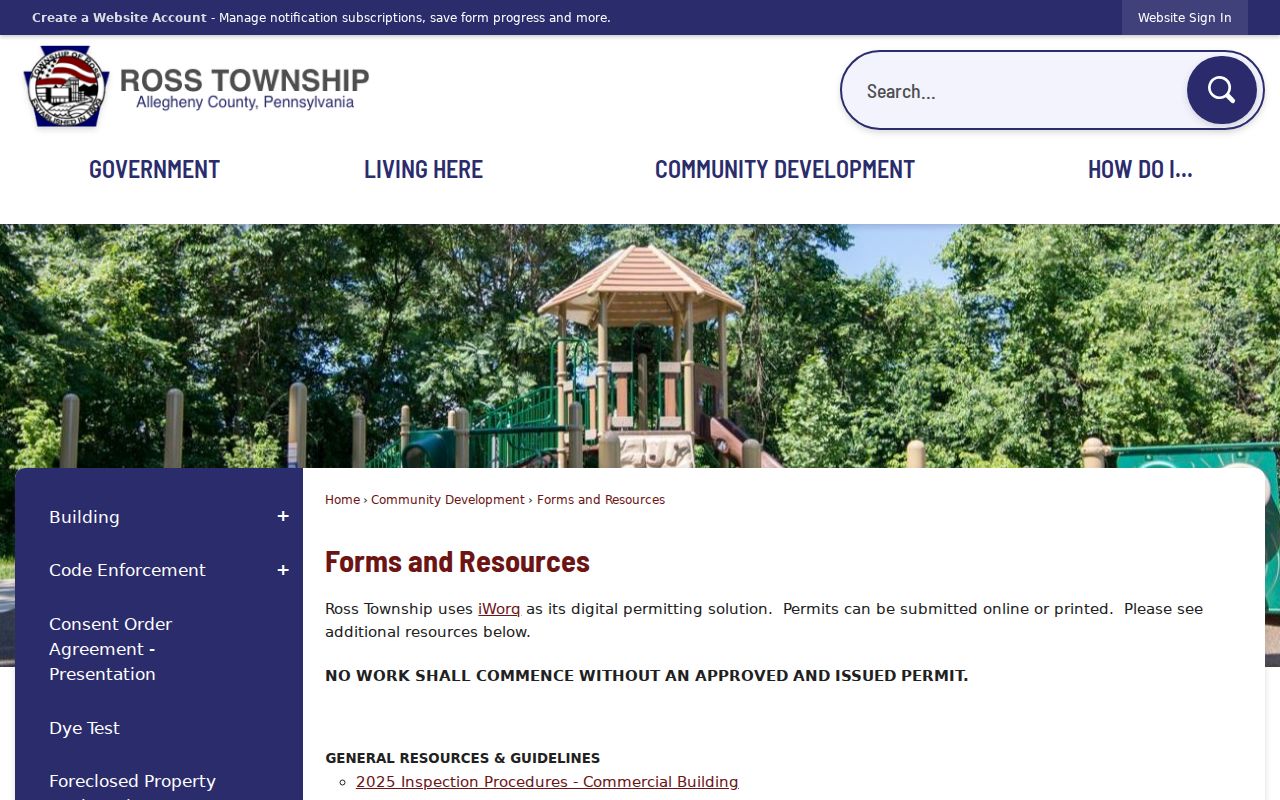
A focused request should name the address, approximate period, and record type, so the Township can locate an existing file and review required redactions.
Historical Ross Township Resident Directories
Northland Public Library’s Ross Township Local History collection is the practical local starting point for earlier residents. It links a 1950 Perrysville telephone directory, early land documents, maps, and Ross materials in Historic Pittsburgh. Northland is also a FamilySearch Affiliate Library, so a library computer can provide access to some additional digital images. Historical sources establish a dated address or land clue, not a continuous occupancy record.
Historic Pittsburgh’s directory collection spans 1815 to 1945 across the collection and states that online coverage from 1837 to 1930 has gaps. Carnegie Library’s microfilm holdings bridge many undigitized directory and phonebook years. The 1931-32 Pittsburgh listing is especially useful because the National Archives guide explicitly includes Ross Township. For a full shelf-by-shelf explanation, use the Ross Township Directory Book.
Northland’s Ross collection is a local bridge from a modern parcel to early maps, documents, and the 1950 phone directory. Pair an entry with the closest map, directory, phonebook, census, deed, or probate source before drawing a conclusion about a household.
Ross Township Road Names and Records
Ross record labels predate the modern township address. The area was once part of Pitt Township in Westmoreland County before Allegheny County’s creation in 1788, and Ross Township was named in 1809. Historic material can therefore appear under Pitt Township, Westmoreland County, Allegheny County, Ross, West View, a nearby postal locality, or an older road label.
Northland documents Perry Plank Road’s evolution into Perry Highway, the formation of West View Borough in 1905, and the later development of McKnight Road. The library’s 1850 map and 1876, 1886, 1897, 1906, 1914, and 1940 map resources help reconcile the label in a deed or directory. No verified source supports a Township-wide street-renumbering year, so preserve the historic wording and use a map or plat before equating it to a current address.
Note: A Pittsburgh postal label can still relate to Ross Township, so confirm municipality and parcel data instead of relying on a mailing label.
Ross Township Resident Privacy Limits
Pennsylvania’s Address Confidentiality Program lets eligible participants use a substitute address in covered government and court records. It is part of a safety plan, not a loophole to work around. RTKL also protects defined personal identification information, and protected voter, sealed, adoption, juvenile, vehicle, utility, and many court records do not become public because an address or name appears elsewhere.
A commercial compiling service is not a replacement for a source office. It can mix dates, people, and addresses, while a county result has a known custodian and record type. When an official source is redacted or unavailable, use the correction, safety, or custodial process rather than trying to defeat a protection.
Ross Township Right-to-Know Requests
The Pennsylvania Right-to-Know Law, Act 3 of 2008, gives a route for requesting existing agency records from the responsible office. A written request should identify the record, the relevant date range, and the desired format. It should not demand that an office create a new residents list. The Office of Open Records describes a normal five-business-day written response period, possible extensions, and a 15-business-day appeal period after a denial.
Ross Township’s general RTKL route accepts a focused non-police request and identifies the Township’s Open Records Officer. Police requests have a distinct Township process. Ask for an electronic or redacted copy where appropriate, retain the cited basis for a denial, and send a property, court, or state record request to its own custodian instead of Ross when that office does not hold it.
A useful Ross Township request names a real record rather than a topic. For example, an address, parcel identifier, permit number, date window, record type, and requested format give Community Development or another office a way to locate an existing file. A broad demand for every person connected to an address invites delay, redaction, or a finding that no such compiled record exists. If a response withholds part of a record, retain the stated legal basis and ask for the releasable portion. The right office depends on the record: the Township holds municipal material, Allegheny County holds property and land records, and Commonwealth agencies retain their own state files.
Ross Township Property-Fraud Checks
Land-record research can also support a cautious property-fraud check. Allegheny County’s Property Fraud Alert sends a notice when a recorded land document includes a selected name in a participating county office. It is a monitoring notice, not proof of ownership, title validity, or fraud. Any unexpected deed, lien, or official-looking mailing should be compared with the recorded document and the Division of Real Estate’s direct copy channel.
There is a practical reason to keep the source chain intact. Pennsylvania consumer-protection notices have warned about forged-deed and title solicitations that appear to concern property ownership. A notification, a portal hit, or a mailing alone does not resolve the issue. Preserve the document number, recording date, parcel or legal description, and sender details, then verify them with the county rather than relying on an unfamiliar caller or embedded link. Ross Township residents who spot an address error should use the municipal and County Address Management correction routes, because Ross assigns or corrects the local address while the County maintains the 911 data used across its systems.
The county fraud-alert page is shown here. It is most useful alongside the source document and a direct question to the county recorder.
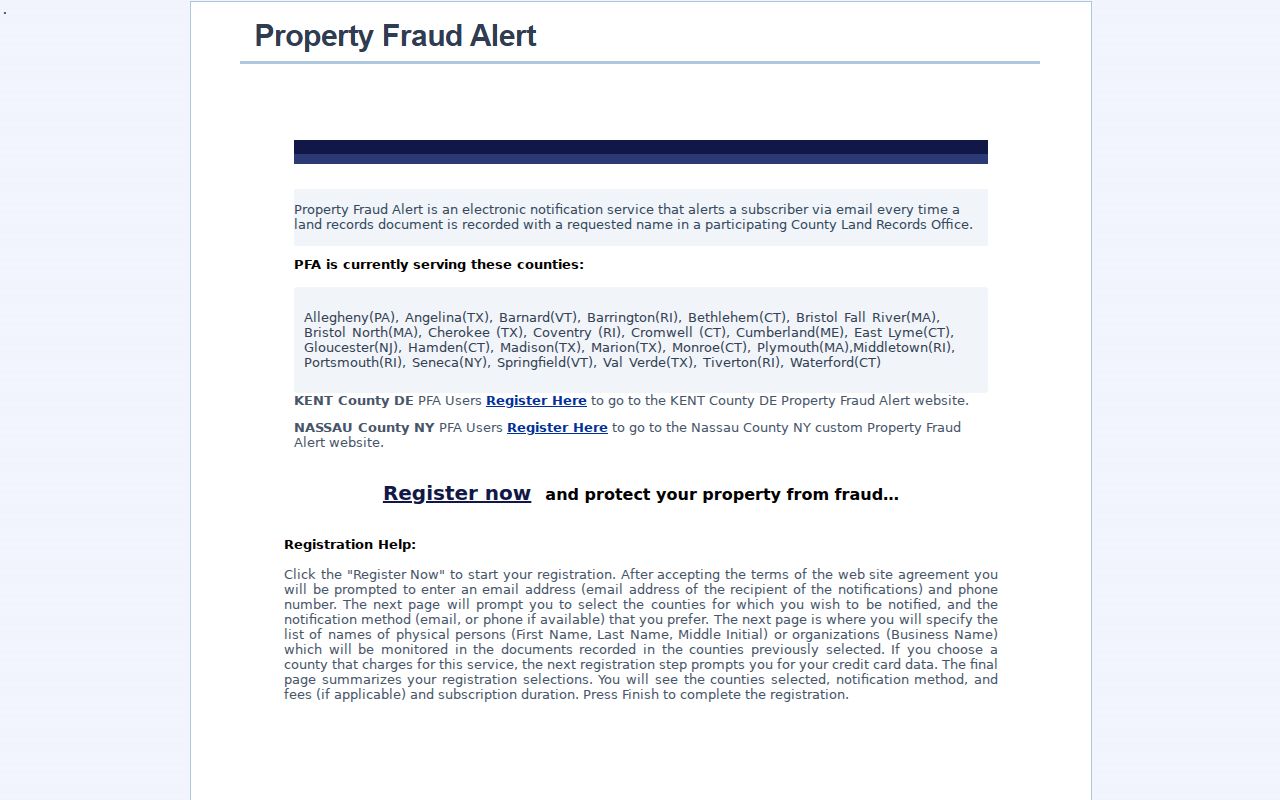
Use official county contact information for a recording question, especially after an unsolicited title or deed communication.